
How to Use the “Healthcare Kaizen” Books Together
Two books. Two audiences. One continuous improvement system.
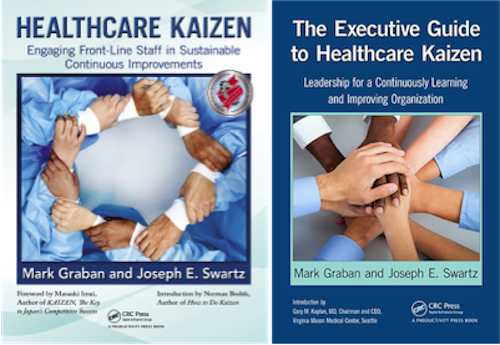
These two Healthcare Kaizen books are designed to work together. One helps senior leaders understand how to lead continuous improvement, while the other provides detailed guidance and real-world examples for those building and managing Kaizen systems. This page explains how organizations typically use both books effectively.
At a Glance:
The Executive Guide to Healthcare Kaizen
-
~200 pages
-
Written for senior leaders and middle managers
-
Focuses on leadership behaviors and sustaining a culture of continuous improvement
-
Over 400 pages
-
Written for improvement leaders and frontline teams
-
Includes 200+ full-color examples and detailed “how-to” guidance
The two books intentionally share some common content to ensure a consistent message across different audiences.
Why We Created “The Executive Guide…”
We heard consistent feedback from internal Lean leaders: Healthcare Kaizen was incredibly valuable—but too long and too heavy to realistically expect senior executives to read.
In response, we worked with our publisher to create a shorter, lighter companion book focused on what busy leaders most need to know: why Kaizen matters, how it creates value beyond cost savings, and what leaders must do to support a culture of continuous improvement.
Who should read which book?
-
Senior leaders & executives:
The Executive Guide to Healthcare Kaizen -
Kaizen leaders, managers, facilitators, frontline teams:
Healthcare Kaizen -
Organizations serious about culture change:
Use both—the Executive Guide for leaders, and Healthcare Kaizen as the shared reference for implementation and examples.
Free Resource: Compare the Two Books
You can download a free PDF file that includes:
- Chapter 1 of the new book
- A comparison of the two books
- Detailed table of contents for The Executive Guide
- 20% discount codes to be used when ordering any of my books through the publisher, Productivity Press.
Click here to register to receive the PDF immediately via email.
Together, these two books support organizations at every level—from executives shaping culture to frontline teams improving daily work. Used together, they help healthcare organizations move beyond projects toward a sustainable system of continuous improvement.
How the Two Books Are Structured
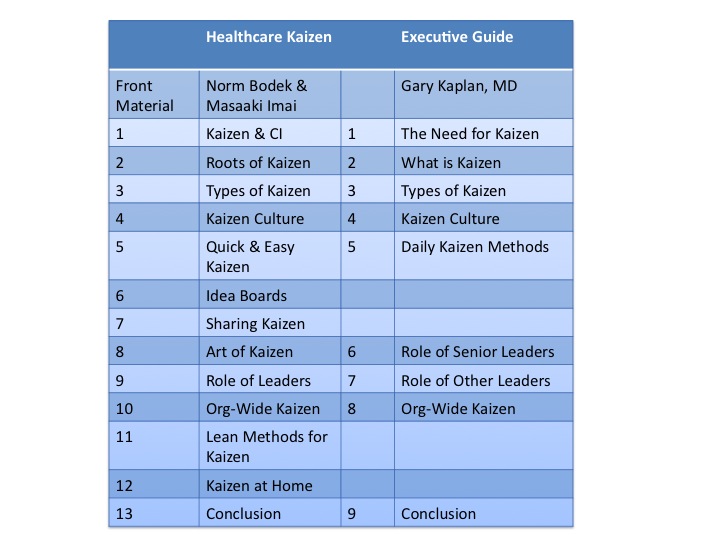
Together, Healthcare Kaizen and The Executive Guide to Healthcare Kaizen help organizations align leadership thinking with daily improvement. Used as a pair, the books support a consistent approach to continuous improvement—one that engages leaders, empowers frontline staff, and connects improvement work to better care for patients and a better work environment for those who provide it.
Organizations often use the Executive Guide to introduce leaders to Kaizen and continuous improvement, while using Healthcare Kaizen as a shared reference for building, managing, and sustaining a Kaizen system over time.